




 Newsletter

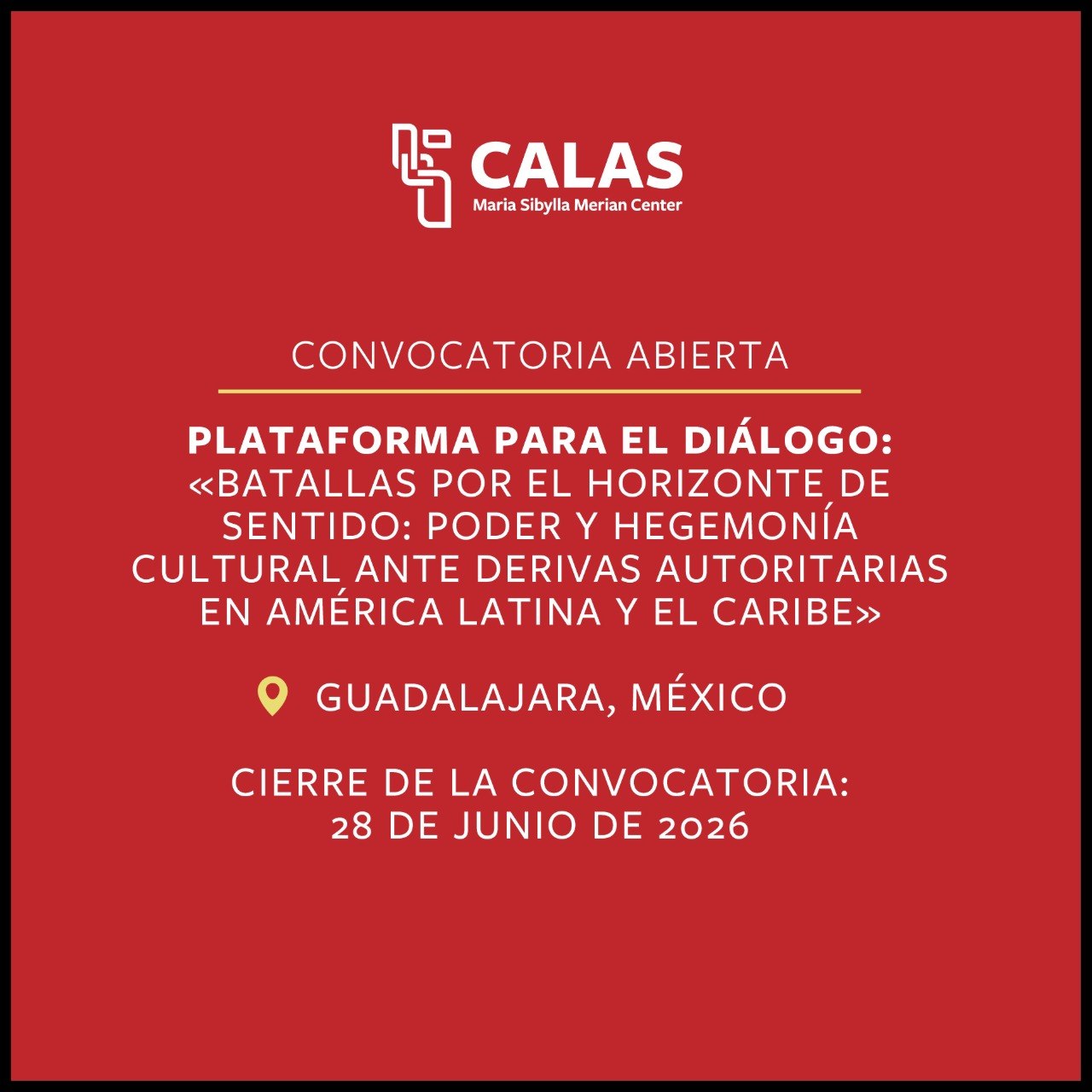
The new phase of knowledge production at the CALAS moves from the diagnosis of the polycrisis toward the construction of horizons of meaning with transformative potential in the face of the obstacles confronting emancipatory practices. This process requires a transdisciplinary approach that allows for the analysis of power struggles in their multiple dimensions: the material basis of production, the relationship between the human and the non-human, political power, and the cultural hegemony that defines values, ideas, and ideological or religious orientations regarding gender. It also encompasses scientific debate, artistic and humanistic expressions, and the broad communicative repertoire that shapes the cultural battle over the ideas, narratives, and discourses of power.
In Latin America and the Caribbean, intense disputes are unfolding over emancipatory horizons of meaning that challenge power, against utilitarian frameworks that seek to legitimize it. These confrontations reflect tensions between authoritarian tendencies and struggles to control the meaning of power and its direction. This phenomenon is linked both to the rise of the far right at the national and international levels, as well as to current or potential authoritarian drifts in governments that identify as progressive or left-wing.
The rise of the far right in the struggle for cultural hegemony runs parallel to the weakening of critical openness in some progressive governments. In certain cases, an authoritarian attitude toward internal criticism is observed, which erodes democratic spaces through practices such as the persecution, defamation, or intimidation of critical voices, or imprisonment, thereby limiting intellectual debate and calling into question the validity of emancipatory criticism within leftist and progressive contexts.
In the regional landscape, some countries with socialist governments are facing internal tensions surrounding the prospect of emancipation: Nicaragua, Venezuela, and Cuba. Others, which have a history of progressive governance, have shifted toward more conservative or far-right positions: Bolivia, Chile, and Ecuador. Likewise, several countries are pursuing reactionary agendas with international backing: Argentina, El Salvador, Honduras, Paraguay, and Costa Rica. In contrast, democratically progressive governments face pressure from the rise of the far right in local governments or in opposing political coalitions: Mexico, Colombia, Brazil, and Uruguay.
A central feature of the current era is the growing belligerence of the far right, which attacks science and critical thinking and promotes a cultural war directed especially against feminist perspectives and critiques of the heteronormative patriarchal order. These stances not only generate hate speech in digital environments but also threats of physical violence. Other targets of attack include critiques of socio-environmental injustice, racism, and the criminalization of migration and social protest. Meanwhile, the theological foundations of prosperity discourse demand adaptation and resignation in the face of the polarization of socio-cultural inequality.
This context raises questions about the role of critical thinking in authoritarian settings. It is crucial to understand why even progressive governments restrict emancipatory criticism rather than integrating it democratically. Although historically the far right has sought to suppress critical thinking, one would expect progressive projects to open up these spaces—which is not happening. On the contrary, challenges persist regarding how to sustain critical work when personal risks exist and spaces for public expression are diminished. Particularly in the face of heightened U.S. intervention that runs counter to the emancipatory aspirations of peoples and nations.
Intellectual production is neither neutral nor a purely individual matter; rather, it operates simultaneously within collective dimensions situated in conflict-ridden symbolic fields. Where the struggle is for the recognition of appropriate horizons situated in spheres such as the state, religion, and the family. It is a battle to establish hegemony over horizons of meaning amid cultural disputes, where critical thought generates alternative horizons in the face of authoritarian closure, challenges common sense and public opinion, and defends life in all its dimensions against the necropolitics of destructive chaos.
Call for Papers
The Platform for Dialogue invites reflection from transdisciplinary perspectives focused on:
1. Intellectual discourses and professional practices: These include universities, think tanks, and corporate ideological spaces that produce foundational ideas. Intellectual actors fulfill diverse roles (advisors, mediators, translators) and participate in multiple forms of communication shaped by political polarization and social diversity.
2. The political operation of ideas: The institutions that articulate foundational ideas—namely mass media, political parties, and social movements—influence the material base, the political organization of the state and government, and culturally shaped forms of coexistence. These dynamics impact the legitimization of power and the configuration of subjectivities within contested horizons of interculturality.
3. Struggles over common sense and beliefs: At this level, public opinion is contested through communicative practices mediated by the digital economy, artificial intelligence, and social media. Formats include influencers, digital content, artistic expressions, and performative collective actions. Critical thinking constructs horizontal deliberative spaces and brings to light subaltern, counter-hegemonic experiences that create alternative emancipatory horizons.
Submission proposals should address one of the following thematic clusters:
Cluster 1: Transdisciplinary approach to discourses and practices.
1. Intellectual production on the state, platform capitalism, extractive rent, techno-imperialism, and artificial intelligence in the reproduction of social order.
2. Family, gender, and violence, including anti-gender and anti-immigrant agendas, as well as debates on indoctrination and human rights.
3. Debates on emancipation, racism, art, and the humanities. Churches, theologies, and religions.
4. Disputes over the human and the non-human: climate change, energy transition, war and peace; scientific denialism and supremacist nationalisms.
Cluster 2: Comparative or Case Studies
1. Disputes over the horizon of meaning in socialist projects with authoritarian tendencies.
2. Strategies and discourses of the far right and its political coalitions in the region.
3. Authoritarian tensions and risks in democratic-progressive countries.
Application Requirements
• This call for proposals is open to applicants in the Social Sciences and Humanities who can contribute to the topics outlined above in empirical, theoretical, and methodological terms.
• Complete the application form with the title and abstract of the proposal, along with a brief academic profile indicating professional background and relevant publications.
• Languages: Spanish and English
• Call opens: May 1, 2026
• Call closes: June 28, 2026
* Event dates: November 26-28, 2026
An academic committee will select the proposals based on criteria of excellence. Applicants will be notified of the decision regarding their proposal by July 31, 2026.
CALAS will cover accommodation and living expenses. In addition, there will be a limited budget for travel expenses.
For more information:
Maria Sibylla Merian Center for Advanced Latin American Studies
Headquarters, University of Guadalajara
